In a move that marks a transformative moment in global healthcare, Saudi Arabia has launched the world’s first artificial intelligence (AI) doctor clinic. Powered by cutting-edge Chinese medical technology from Synyi AI, the groundbreaking clinic introduces a new era of fully autonomous medical consultations. Located in Al-Ahsa and Riyadh, the clinic is part of a pilot program that may soon redefine how primary care is delivered, not just in the Kingdom but around the world.
Table of Contents
A First-of-Its-Kind: The AI Doctor Clinic
The AI doctor at the heart of this innovation is named Dr Hua, developed by Shanghai-based Synyi AI, a startup backed by tech giants like Tencent, GGV Capital, Hongshan Capital, and local government partners. Dr Hua is more than just a virtual assistant — it’s an AI-powered diagnostic system capable of conducting full-cycle medical consultations, from symptom analysis to treatment recommendations.
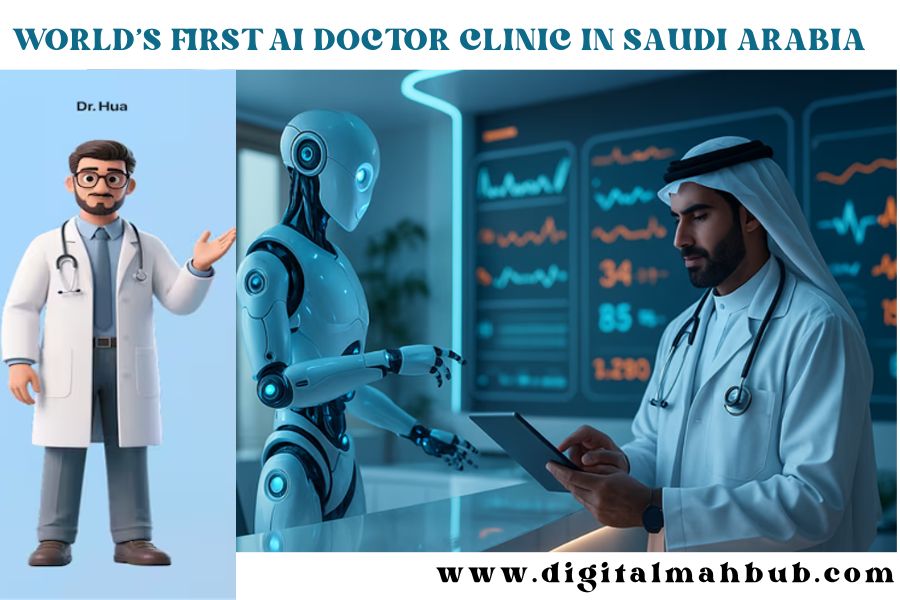
The clinic, opened in partnership with Almoosa Health Group, is the first facility globally where artificial intelligence acts as the primary diagnostic interface, while human doctors serve as safety reviewers. This innovation is currently in its trial phase, with data being compiled for regulatory approval in Saudi Arabia, which is expected within the next 18 months.
How the AI Doctor Works
The AI consultation process has been designed for maximum efficiency and user-friendliness:
- Patient Interaction: Upon arrival, patients input their symptoms into a tablet or digital kiosk.
- Conversational Diagnosis: Dr Hua engages the patient in a dynamic Q&A session, mimicking the interaction with a human doctor.
- Data Analysis: Using medical databases, localised large language models (LLMs), and image recognition (for scans and visuals captured by human assistants), the AI interprets the information.
- Treatment Plan: After analysis, Dr Hua offers a personalized treatment plan.
- Human Review: A licensed doctor then reviews and signs off on the plan, ensuring medical safety.
This entire process typically takes less than 10 minutes and is available in multiple languages to accommodate Saudi Arabia’s diverse population.
What Conditions Can Dr Hua Treat?
At present, the AI clinic is equipped to diagnose and treat 30 common respiratory illnesses, including asthma, pharyngitis, and other upper respiratory tract infections. Plans are already in place to expand to 50 conditions, including gastroenterological and dermatological diseases. The clinic is not yet designed to handle emergencies or rare medical issues, where human intervention remains essential.
The Accuracy Factor
One of the most compelling aspects of Dr Hua is its high accuracy rate. According to Synyi AI, the system achieved an error rate of less than 0.3% during pre-trial testing. This level of precision, paired with human oversight, offers a high degree of safety and reliability, especially for routine diagnoses.
Vision 2030 and the Strategic Role of AI in Saudi Healthcare
The launch of this AI clinic is not an isolated innovation. It forms part of Saudi Arabia’s Vision 2030, a sweeping economic and social reform plan that aims to diversify the Kingdom’s economy away from oil and toward technology, innovation, and sustainability. Healthcare is one of the strategic pillars of this vision, and AI is expected to play a significant role in:
- Expanding healthcare access in remote or underserved regions.
- Reducing wait times and hospital crowding.
- Freeing up human doctors to handle more complex and critical medical cases.
- Standardizing diagnostic quality by removing subjective variability.
The initiative is also in alignment with global healthcare trends, where AI is increasingly seen as a tool to bridge workforce shortages and improve patient outcomes. Recently Saudia has unveiled the Humain AI infrastructure.
Pros and Potential Benefits
The AI clinic introduces numerous benefits that could reshape how primary healthcare is delivered:
- Speed and Efficiency: Patients receive diagnosis and treatment plans in minutes.
- Cost Reduction: Lower operational costs due to reduced human staffing.
- Accessibility: Especially beneficial in rural or low-resource areas.
- Multilingual Support: Enhances reach across diverse demographic groups.
- Consistency: Standardized treatment protocols reduce diagnostic variability.
Concerns and Ethical Considerations
Despite its promise, the AI clinic model is not without concerns. Medical professionals and ethicists have raised questions about:
- Diagnostic Nuances: Can AI truly detect subtle, complex symptoms that might escape algorithmic interpretation?
- Accountability: Who is responsible in case of a misdiagnosis—AI developers, healthcare providers, or the reviewing doctor?
- Data Privacy: How is sensitive health information stored, processed, and protected in AI systems?
- Public Trust: Will patients feel comfortable and confident discussing health issues with a machine?
These questions are especially important as countries around the world look to replicate the Saudi model. Regulatory frameworks and ethical guidelines will need to evolve quickly to keep pace with this technological shift.
AI Clinic: Redefining Healthcare with Artificial Intelligence
The AI Clinic represents a cutting-edge medical service system where AI doctors manage the full healthcare journey—from initial consultation to treatment recommendation. Human doctors serve as “safety gatekeepers,” reviewing each diagnosis and prescription to ensure accuracy and safety. The system is designed with advanced features like multilingual support, cultural adaptation, and integration of smart medical devices for a seamless and inclusive patient experience.
Key Features of the AI Clinic
1. Multi-Agent Collaboration
The clinic operates using multiple intelligent agents that collaborate across patient interaction, data collection, analysis, and decision-making. This synergy boosts diagnostic efficiency and clinical accuracy.
2. Integration with Advanced Medical Devices
The system connects with devices like digital stethoscopes, intelligent laryngoscopes, and AI-enabled imaging tools. These devices convert physical exam data into structured digital records for AI analysis.
3. Three-Level Quality Control System
To maintain diagnostic integrity, the clinic employs a robust quality control process:
- Rule-based knowledge embedding
- Retrieval-Augmented Generation (RAG) compliance checks
- AI matrix cross-validation plus human review
This triple-layered system helps prevent AI errors and ensures trustworthy medical outputs.
4. Localized Language Model Deployment
Proprietary large language models (LLMs) are customized with regional medical knowledge, languages, and cultural nuances. This ensures that care delivery is both accurate and contextually relevant.
5. Real-Time Symptom Monitoring & Predictive Health Insights
Combining wearable tech and machine learning, the AI Clinic continuously monitors vital signs and uses predictive algorithms to assess potential health risks. This enables early intervention, proactive care, and ongoing health optimization.
6. EHR Interoperability & Data Privacy Management
The clinic integrates seamlessly with global Electronic Health Record systems while giving patients full control over their data. Features like consent tracking, anonymization, and transparent data access ensure privacy, compliance, and ethical AI use.
7. Adaptive Learning & Continuous Model Optimization
AI models are updated in real-time based on patient outcomes, new medical research, and clinical feedback. This ensures that diagnoses and treatment plans reflect the latest standards of care, reducing model drift and enhancing reliability.
8. Personalized Patient Education & Recovery Support
Beyond diagnosis, the system offers customized education materials, lifestyle coaching, and recovery plans, helping patients make informed decisions and adopt healthy behaviors for long-term wellness.
9. Emergency Escalation & Remote Triage Protocols
When critical symptoms are detected, the AI prioritizes patients for urgent human review or escalation to telehealth professionals, ensuring timely, life-saving care—even for remote users.
10. Accessible Interaction Interfaces
Designed for universal usability, the AI Clinic supports voice control, gesture recognition, and even sign language interfaces, making healthcare accessible to elderly and differently-abled patients.
The AI Clinic blends automation with human oversight, creating a scalable and safe model for future-forward healthcare.
A Glimpse Into the Future of Healthcare
The Saudi AI doctor clinic stands as a symbol of the future of medicine — one where human intelligence is supported, not replaced, by machines. As Synyi AI’s CEO Zhang Shaodian aptly said:
“What AI has done in the past is assist doctors, but now we are taking the final step of the journey to let AI diagnose and treat the patients directly.”
As of now, dozens of patients have already experienced consultations with Dr Hua at no cost, as part of the ongoing trial. Their feedback, along with system-generated diagnostic data, will guide the Saudi government’s decision on expanding the program nationwide and possibly beyond.
Frequently Asked Questions (FAQs)
Who is the first AI Doctor in the world?
Dr Hua is the World’s first AI-powered doctor in a clinic in Saudi Arabia unveiled in May 2025. The AI doctor is a system that autonomously diagnoses and prescribes treatments for patients, with human doctors reviewing the plans for accuracy. Synyi AI and Almoosa Health Group launched the AI doctor.
What is the world’s first AI hospital?
The world’s first AI-powered hospital/clinic is in Al-Ahsa, Saudi Arabia, in partnership with Almoosa Health Group and Synyi AI. It features an AI doctor that manages diagnosis and treatment, supported by human doctors for final approval.
Is there an AI doctor?
Yes, Saudi Arabia has launched the world’s first AI doctor clinic. The AI system, called “Dr Hua,” diagnoses patients and suggests treatments, which are reviewed by a human doctor for safety. This innovative approach is currently being piloted as part of a collaboration between Synyi AI and Almoosa Health Group.
1. What is the AI Doctor Clinic in Saudi Arabia?
It is the world’s first fully AI-powered clinic, where an AI system called “Dr Hua” handles patient diagnosis and treatment planning, with oversight from human doctors.
2. Who developed the AI technology behind the clinic?
The AI system was developed by Synyi AI, a Shanghai-based health tech company backed by Tencent, in partnership with Saudi Arabia’s Almoosa Health Group.
3. How does Dr Hua work with patients?
Patients describe symptoms on a tablet, after which Dr Hua asks follow-up questions, analyzes health data, and suggests a treatment plan. A human doctor reviews and signs off on the final recommendation.
4. What conditions can the AI doctor currently treat?
The AI clinic currently specializes in respiratory conditions like asthma and pharyngitis but plans to expand to around 50 diseases, including gastroenterological and dermatological issues.
5. Is this AI clinic fully autonomous?
While the AI conducts most of the consultation and diagnosis process, human doctors remain involved for safety, emergency care, and final approvals.
Final Thoughts
The opening of the world’s first AI doctor clinic in Saudi Arabia is more than a technological milestone — it’s a paradigm shift in global healthcare. It blends AI’s computational power with the medical knowledge of human professionals to create a system that is fast, accessible, and potentially scalable to millions. If proven successful, this initiative could become a model for other nations grappling with healthcare accessibility, rising costs, and workforce shortages.
As the world watches closely, Saudi Arabia’s pioneering step could well be the blueprint for the next generation of medicine.
Leave a Reply