The Cashless Bangladesh Summit 2025, hosted by Mastercard in partnership with the Institute of Cost and Management Accountants of Bangladesh (ICMAB), was held on 27 August 2025 in Dhaka under the theme, “The Intersection of Finance and Technology.” The summit brought together regulators, policymakers, fintech leaders, and business experts to discuss how Bangladesh can accelerate its transformation into a digital, cash-free economy.
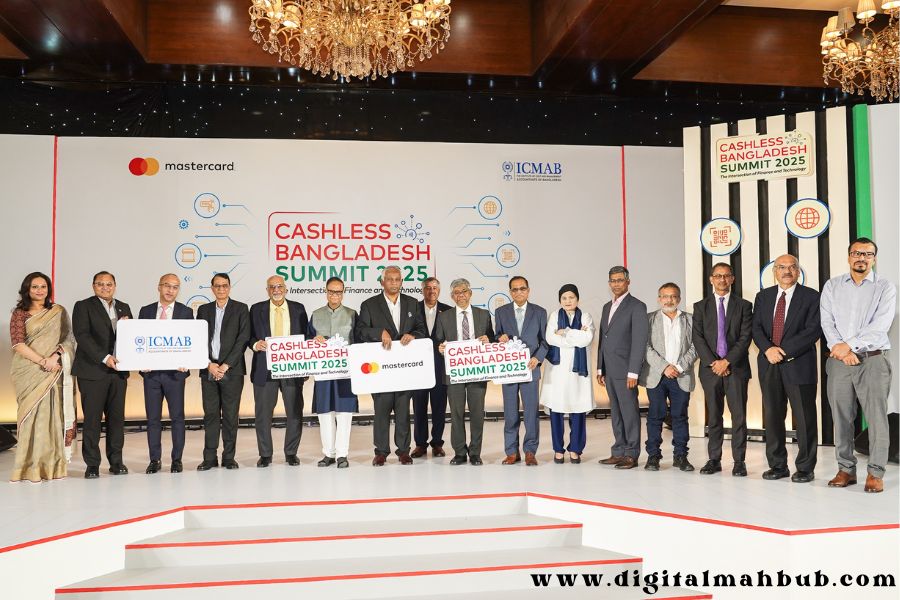
Table of Contents
Summit Objectives & Theme
The summit had one overarching goal: to spark actionable strategies for building a transparent, inclusive, and digitally powered economy.
Key objectives included:
- Exploring how Bangladesh can move toward a cashless society while ensuring inclusion.
- Highlighting the urgency of reducing dependency on physical cash.
- Showcasing the role of fintech, regulators, and private sector partnerships.
Leaders emphasized that Bangladesh is at a pivotal moment. The move to cashless finance is no longer aspirational—it is an immediate necessity.
Prominent Speakers & Remarks
Mahtab Uddin Ahmed – President, ICMAB
“Bangladesh is at a critical juncture in its financial evolution. The shift to a cashless economy is no longer a distant goal but an immediate necessity. This summit has brought together the right stakeholders to act on creating a digital-first financial system that promotes transparency, security, and inclusion.”
Syed Mohammad Kamal – Country Manager, Mastercard Bangladesh
“A cashless society drives innovation, enhances efficiency, and expands financial access across all sectors and communities. Today’s dialogues mark a significant step in shaping a future-ready, inclusive Bangladesh.”
Dr. Ahsan H. Mansur – Governor, Bangladesh Bank (Chief Guest)
The Governor made several significant announcements and observations:
- On Nagad’s privatization: “The Postal Department does not have the capacity to operate Nagad. We want technology companies to come forward and invest in Nagad. We expect to find new investors within the next three to four months.”
- On rising costs of cash: “The cost of printing cash is increasing by 10%, or around Tk 2,000 crore, every year. If this continues, how can this be a digital economy?”
Session I: The Role of Fintech in Building a Cashless Economy
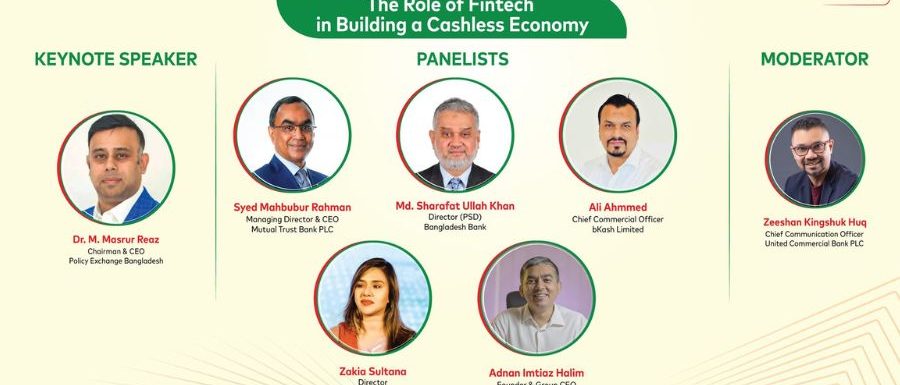
Keynote – Dr. M. Masrur Reaz, CEO & Chairman, Policy Exchange Bangladesh
Dr. Reaz urged Bangladesh to learn from successful digitalization models in China, India, and Sweden. He stressed the importance of:
- Enabling wholesale and corporate digital payments.
- Strengthening regulatory support for fintech innovation.
- Investing in robust digital infrastructure to ensure security and scalability.
Panel Discussion
Featuring voices from across sectors:
- Md. Sharafat Ullah Khan (Bangladesh Bank; Payment Systems)
- Syed Mahbubur Rahman (Mutual Trust Bank)
- Ali Ahmed (bKash)
- Zakia Sultana (Mastercard)
- Adnan Imtiaz Halim (Sheba Platform)
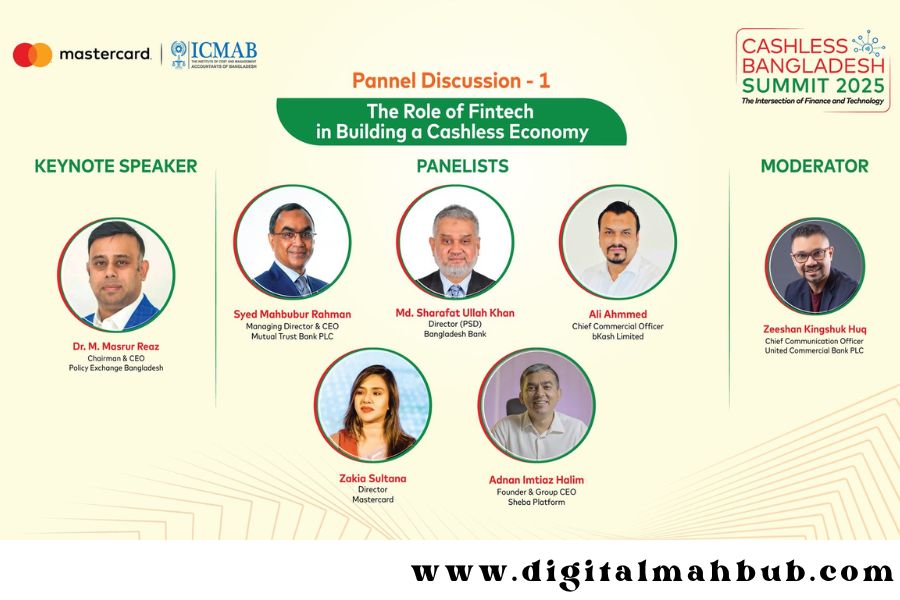
The panel included representatives from Bangladesh Bank, Mutual Trust Bank, bKash, Mastercard, and Sheba Platform. Together they discussed:
- How fintech can bring financial services to underserved groups.
- Building partnerships across banks, telecoms, and tech companies.
- Creating a seamless and secure digital payment ecosystem.
The takeaway was clear: fintech is central to Bangladesh’s cashless future, but collaboration is the key driver.
Session II: Regulatory Reforms & Policy Roadmap
Keynote – Dr. Debapriya Bhattacharya, Distinguished Fellow, CPD
Dr. Bhattacharya emphasized inclusivity and the risks of leaving marginalized groups behind:
“A cashless economy should not transform into an incomeless economy; rather, it should act as a catalyst to generate income for those outside formal employment.”
He highlighted several benefits of digital transition:
- Greater transparency and accountability.
- Increased financial inclusion across all social groups.
- Lower costs of transactions compared to cash.
- Enhanced global economic integration.
He recommended forming a central task force led by Bangladesh Bank to coordinate among ministries, banks, fintech companies, and telecom operators.
Policy Panel
Panelists included senior representatives from the Finance Division, NBR, Bangladesh Bank, City Bank, and legal experts.
- Dr. Md Khairuzzaman Mozumder (Secretary, Finance Division)
- Md Abdur Rahman Khan (Secretary, NBR)
- Dr. Md Habibur Rahman (Deputy Governor, Bangladesh Bank)
- Mashrur Arefin (City Bank & ABB)
- Anita Ghazi Rahman (The Legal Circle)
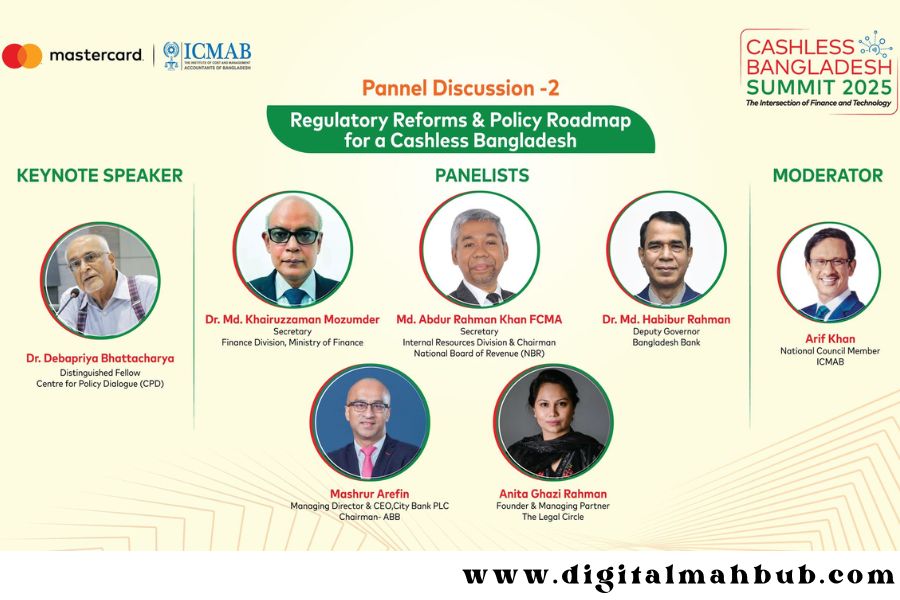
Their key points were:
- The need for regulatory sandboxes to safely test new innovations.
- Tax reforms that encourage digital transactions and innovation.
- Stronger consumer protection frameworks to build public trust.
- Balancing innovation with oversight to maintain financial stability.
This session underlined the importance of aligning regulation with the fast-changing digital financial landscape.
Broader Impacts & Strategic Takeaways
The summit produced several broad insights critical for Bangladesh’s journey toward a cashless economy:
- Private Sector Mobilization
- Privatizing Nagad shows the push to bring in technologically advanced investors who can drive competition and innovation.
- Cost Efficiency
- Digital transactions reduce the rising costs of printing and managing physical currency.
- Inclusive Growth
- A cashless system must ensure access for low-income groups, rural communities, and the unbanked population.
- Coordinated Policy
- A central task force can break down silos and encourage unified efforts across institutions.
- Regulatory Innovation
- Sandboxes allow safe experimentation, while consumer safeguards protect users from fraud and misuse.
- Stakeholder Collaboration
- True progress requires collective effort from the government, banks, fintechs, and legal experts.
Session Overview Table
| Session | Focus | Key Insights |
|---|---|---|
| Opening Remarks | Vision & rationale | Urgency to shift to cashless transformation for transparency and inclusion. |
| Chief Guest (BB Governor) | Risk reduction & infrastructure | Nagad privatization, mandatory digital adoption, rising cost of cash. |
| Fintech Panel & Keynote | Digital inclusion & infrastructure | Global models, fintech’s role in seamless and affordable payments. |
| Policy Keynote & Panel | Regulation & ecosystem development | Task force, sandboxes, tax reform, safeguards for consumers. |
Final Thoughts
The Cashless Bangladesh Summit 2025 was more than an event—it was a turning point. It highlighted a national urgency to embrace digital finance while also stressing the importance of inclusion, transparency, and collaboration.
The voices of regulators, fintech leaders, and policymakers converged around a common message: innovation needs supportive policy, inclusion must be designed intentionally, and digital finance requires strong infrastructure. If the momentum generated by this summit translates into action, Bangladesh could soon emerge as a regional leader in financial digital transformation.
Leave a Reply